

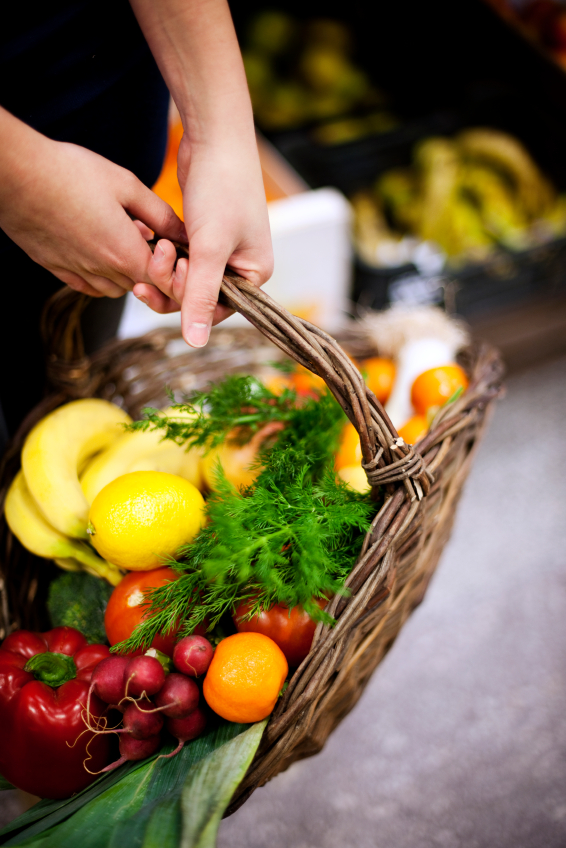
 Warmer weather is finally here! It is time to open the windows, let in some fresh air, and do some spring cleaning. While you’re cleaning your house, don’t forget to take some time for yourself, too—springtime is the perfect time to start enjoying cleaner and greener foods, especially fruits and veggies. Crisp greens, flavorful alliums like chives and leeks, and tender fresh herbs are some of the first veggies to hit farmers markets and produce departments. It won’t be long until we’re soaking up the warm days of summer and all kinds of produce.
If you want to really spring-clean your ingredients, look for organic produce, which is produced without synthetic pesticides, herbicides, fungicides, or fertilizers. Organic produce isn’t irradiated or treated with industrial solvents, and it has not been genetically modified. Luckily, when you’re in a grocery store, it’s easy to tell whether or not any given fruit or vegetable is organic or conventional. Just look at the four- or five-digit code that’s on the produce. (It’s usually a small sticker.) Here’s what those codes mean:
- A four-digit code means that the fruit or vegetable has been produced conventionally.
- A five-digit code starting with an 8 means the fruit or vegetable has been genetically modified.
- A five-digit code starting with a 9 means the fruit or vegetable is organic.
Of course, not all produce is sprayed equally, so if you’re trying to choose which fruits and veggies to buy organic, you might want to look at the Environmental Working Group’s list of the top-sprayed produce (the Dirty Dozen) and the least-sprayed produce (the Clean Fifteen). It’s worth buying organic versions of the Dirty Dozen to avoid exposing you and your family to pesticides and other synthetic chemicals.
Take these lists to the store with you to spring-clean your body!
Dirty Dozen
- Apples
- Celery
- Cherry tomatoes
- Strawberries
- Peaches
- Spinach
- Nectarines (imported)
- Grapes
- Sweet bell peppers
- Potatoes
- Cucumbers
- Hot peppers
Clean Fifteen
- Onions
- Sweet corn (note that most corn products contain GMO corn, which is a different strain;
- sweet corn refers to fresh ears)
- Pineapples
- Avocado
- Asparagus
- Sweet peas
- Mangoes
- Eggplant
- Cantaloupe
- Kiwi
- Cabbage
- Papaya (note that Hawaiian papayas are GMO)
- Sweet potatoes
- Grapefruit
- Mushrooms

Thanks for this post. The coding info is very helpful!
Helps too when the produce falls together in the bins so you can make sure you truly grab the organic items!
Thank you so much for supporting the fact that organic food is safe. That’s how I feel and what I practice.
I am grateful and “flabergasted’ to learn that some of the clean fifteen produce is GMO!!!. UNFORTUNATELY I just made one gallon of KimChi with GMO savoy CABBAGE. Thank you Sheryl